What “karat” actually means
Pure gold is too soft for jewellery. A ring in 100% pure gold would bend, scratch, and lose its shape within weeks of daily wear. So gold is mixed with other metals, silver, copper, zinc, palladium, to give it strength. The karat number tells you how much of the metal is actually gold.
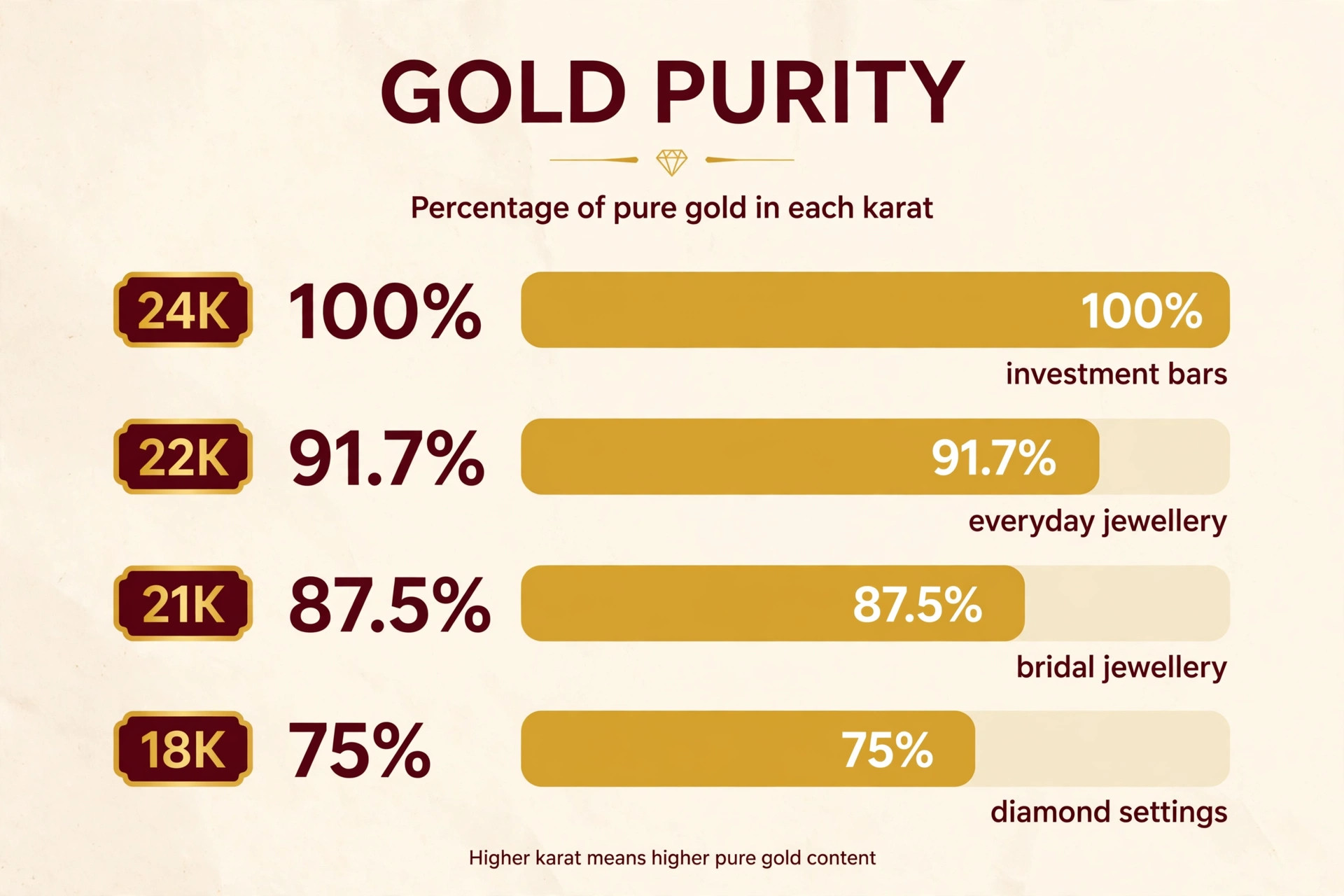
The scale runs to 24. So 24K means 24 out of 24 parts gold, pure gold. 22K means 22 out of 24 parts gold, about 91.7% pure. 21K means 21 out of 24, about 87.5% pure. 18K means 18 out of 24, about 75% pure. The lower the karat, the more alloy metal is mixed in, which means more strength but a slightly less rich gold colour.
This is the single most important thing to understand before buying gold jewellery in Pakistan, and it takes about thirty seconds to learn. Everything else follows from it.
24K: pure gold, not for wearing
24K is 99.9% pure gold. It is beautiful, deeply yellow, and completely impractical for jewellery. It dents if you look at it wrong. In Pakistan, 24K appears mainly as gold bars, coins, and investment-grade bullion, the forms people buy to hold value, not to wear.
If someone offers you “24K jewellery,” be cautious. Real 24K cannot hold a stone setting or keep a detailed shape. What you want to wear starts at 22K and below.
22K: the Pakistani standard
22K gold, about 91.7% pure, is the classic jewellery gold of Pakistan and much of South Asia. It has the rich, warm yellow colour people picture when they think of gold, and it is strong enough for most jewellery while keeping high gold value per gram.
Choose 22K for plain gold pieces, bangles, karas, chains, and classic designs without delicate stone settings. It is also the natural choice if investment value matters to you alongside beauty, because more of what you pay for is gold itself. Most of our everyday and bridal gold jewellery is 22K for exactly this reason.
21K: the bridal workhorse
21K gold, about 87.5% pure, is the traditional bridal standard in Pakistan. That small step down from 22K adds meaningful strength, which matters enormously for bridal pieces: intricate filigree, kundan and polki stone settings, and detailed engraving all need metal that holds its shape under stress.
Choose 21K for bridal sets, stone-set jewellery, and any piece with fine detail work. The colour difference from 22K is barely noticeable to the eye, but the durability difference is real. When a craftsman recommends 21K for your bridal set, they are protecting your jewellery, not cutting corners.
18K: the stone-setter’s choice
18K gold, 75% pure, is the international standard for fine jewellery and the right choice whenever stones need a secure home. The higher alloy content makes the metal harder and springier, so prongs grip diamonds and gemstones tightly and settings survive daily knocks.
Choose 18K for engagement rings, diamond jewellery, and any piece where stone security is the priority. It is also the standard for white gold and rose gold pieces, since those colours require more alloying anyway.
Which purity for which purpose
For daily wear pieces like bangles, chains, and simple rings, 22K gives you the classic look with good durability. For bridal and stone-set traditional pieces, 21K handles the detail work. For engagement rings and diamond jewellery, 18K protects your stones. For pure investment, buy 24K bars or coins, not jewellery.
There is no universally “best” karat. There is only the right karat for the piece and the life it will live. A good jeweller matches purity to design. Ask why a piece is made in its karat, and expect a clear answer.
Gold colours: yellow, white, and rose
All gold starts yellow. White gold is gold alloyed with white metals like palladium or nickel, giving a silvery finish that suits diamonds and modern designs. Rose gold is gold alloyed with more copper, giving a warm pink tone that has become very popular for engagement rings and contemporary pieces.
The karat rules still apply: an 18K white gold ring and an 18K yellow gold ring contain the same amount of gold. Colour is about the alloy mix, not the purity. White gold is usually rhodium-plated for extra brightness, and the plating can be refreshed every few years.
How to verify purity when you buy
Ask for the purity to be stated on your receipt in writing, for example “22K” or “916” (the hallmark number for 22K). Reputable jewellers stamp purity marks on the piece itself. In Pakistan, look for clear karat markings and buy from jewellers who test gold openly in front of you.
Be wary of deals that seem too good, vague descriptions like “pure gold jewellery” without a karat number, and sellers who get evasive when you ask about purity. Gold has a market price. Nobody sells it far below that price out of generosity.
A final word
Understanding karats turns you from a nervous buyer into a confident one. You will know why the bridal set is 21K, why the engagement ring is 18K, and why the bangles are 22K, and you will be able to have a real conversation with your jeweller instead of just nodding along. That confidence is worth more than any discount.