Two metals, two different games
Gold is straightforward: purity is purity, and the rate is published daily. Diamonds and silver play by different rules. Diamond value depends on four interacting qualities, and silver’s value depends entirely on how much of the piece is actually silver. This guide gives you the working knowledge to ask sharp questions before you buy either.
Diamond shapes: what you are actually choosing
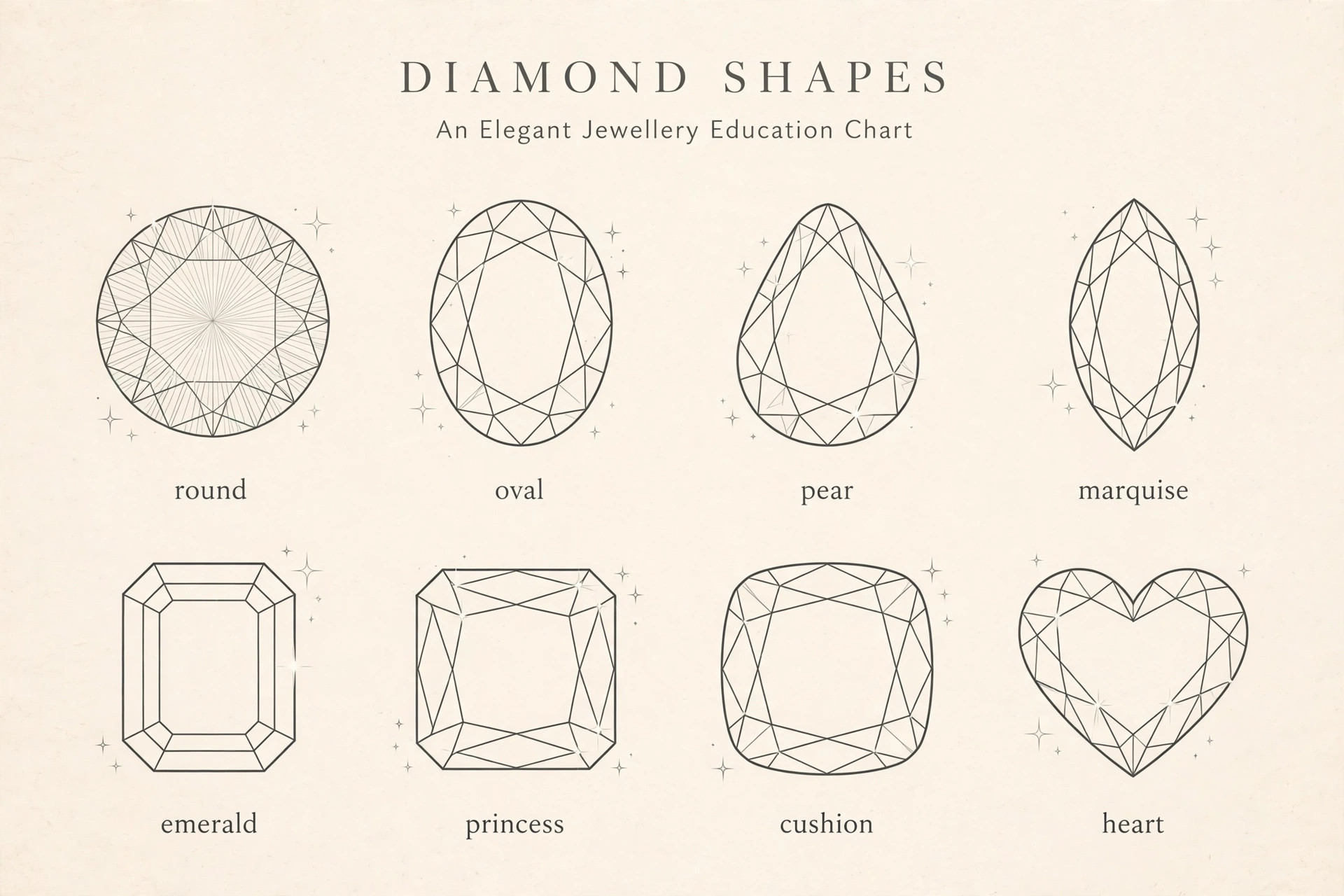
A diamond’s shape is its outline when viewed from above. It affects the look far more than most buyers expect. Here are the shapes you will actually encounter:
Round brilliant. The classic. It returns the most sparkle for its weight because the cut was mathematically designed for light performance. It also costs the most per carat, for exactly that reason.
Oval. The elegance of a round with a slightly larger face-up appearance, so it can look bigger than a round of the same weight. Popular for engagement rings.
Pear. A teardrop, part round and part marquise. Distinctive and flattering on the hand. The pointed tip needs a protective setting.
Marquise. A long, pointed oval that maximises apparent size. Dramatic, and the points need protection in the setting.
Emerald. A rectangle with cut corners and long, straight facets. Less fiery than a round, but prized for its calm, mirror-like flashes. Shows inclusions more easily, so clarity matters.
Princess. A square with brilliant-style facets. Modern, sparkly, and a good value compared to rounds.
Cushion. A soft square with rounded corners, an old cut with a romantic feel. Very forgiving of slight colour tints.
Heart. The romantic choice, technically demanding to cut well. Symmetry is everything here.
The 4Cs, in the order that matters
Cut matters most for beauty. It is the only C controlled entirely by human skill: the proportions and symmetry of the facets. A well-cut modest stone outshines a poorly cut premium one. Always ask about cut first.
Colour grades from D (colourless) to Z (visibly tinted). The differences between neighbouring grades are subtle to anyone but a grader. Near-colourless stones (G to J) look white in normal viewing and cost far less than D to F.
Clarity grades the tiny internal marks from FL (flawless) to I (included). Here is the practical truth: if you cannot see the inclusion with your naked eye, you are paying for something only a loupe can find. VS and SI grades are the sweet spot for most buyers.
Carat is weight, not size. One carat equals 0.2 grams, divided into 100 points, so a 50-point stone is half a carat. Prices jump at the whole numbers (1.00, 1.50, 2.00 carat), which means a 0.90 carat stone can be dramatically better value than a 1.00 carat one that looks nearly identical.
Certification: the diamond’s bill
For any diamond of meaningful value, ask for certification from a recognised lab, GIA and IGI being the names you will hear most. The certificate documents the 4Cs independently of the seller. Buying an uncertified diamond of significant size is like buying unstamped gold: possibly fine, but unverified. Small accent stones in jewellery are rarely certified individually, which is normal, but the centre stone of an engagement ring should be.
Silver types: read the number
Silver jewellery is stamped much like gold, and the numbers work the same way, parts per thousand:
| Stamp | Name | What it means |
|---|---|---|
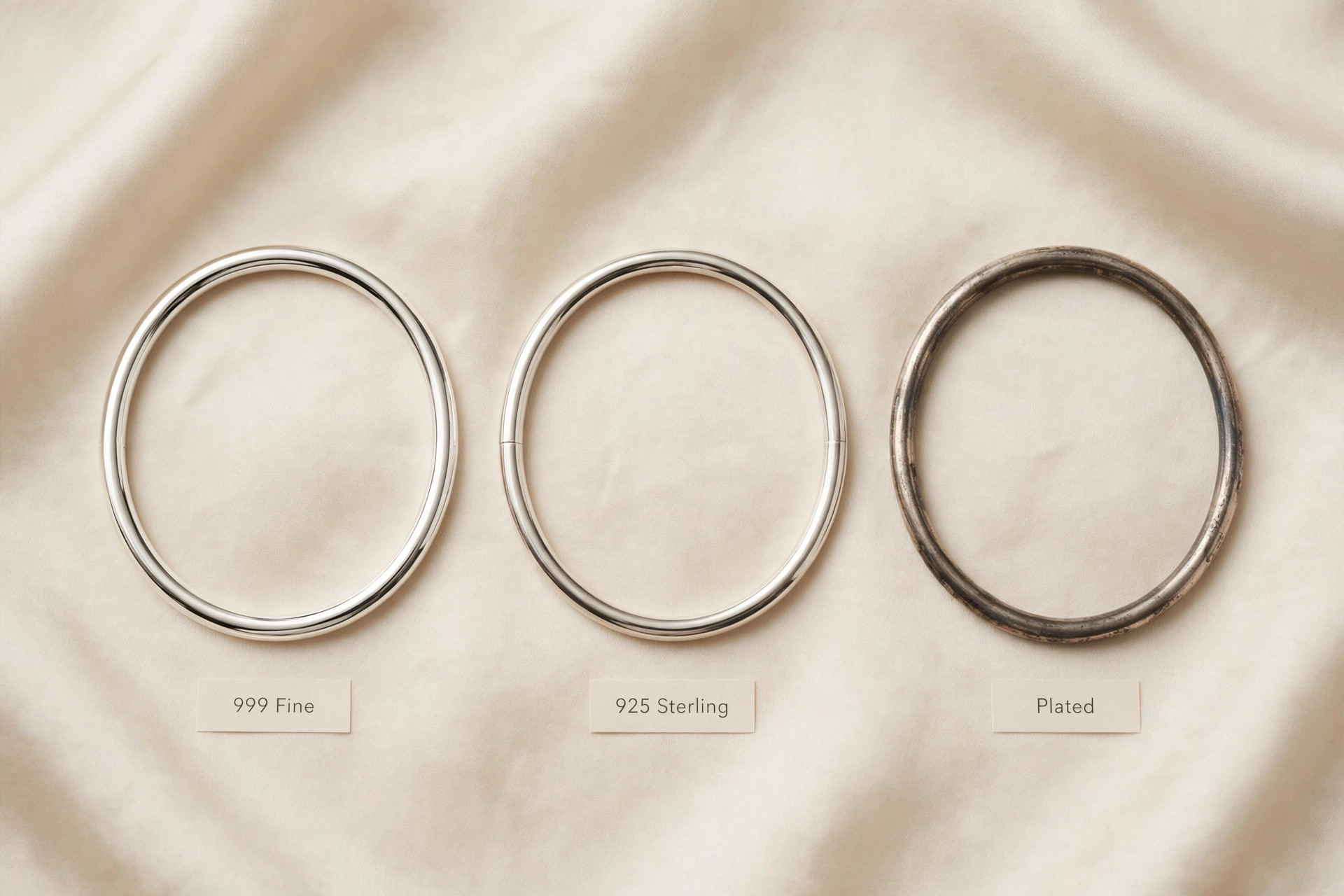
| 999 | Fine silver | 99.9% pure. Soft, best for simple pieces and investment. |
| 958 | Britannia silver | 95.8% pure. Harder than fine, still very pure. |
| 925 | Sterling silver | 92.5% pure. The standard for quality silver jewellery worldwide. |
| 900 | Coin silver | 90% pure. Older standard, seen in vintage pieces. |
| EPNS / plated | Plated | A thin layer of silver over base metal. Not solid silver. |
925 sterling is the mark to look for when buying silver jewellery. It has the strength for daily wear while keeping high silver content. 999 fine is purer but softer, better suited to simple designs. Anything marked EPNS or described as “silver plated” is a base metal with a silver coating: fine for fashion, but it has no melt value and the plating wears through with time.
Caring for silver
Silver tarnishes. That is chemistry, not a defect: the metal reacts with sulphur in the air and forms a dark layer. Sterling tarnishes faster than fine silver because of its copper content. Store silver in a dry, sealed pouch, put it on after perfume and lotions, and polish gently with a soft silver cloth when it dulls. A little care keeps it bright for decades.
One honest note
Our shop’s heart is gold, and that is where our craftsmanship lives. We do offer silver jewellery, and everything above applies to choosing it well. For diamonds, use this guide to buy knowledgeably wherever you shop, and bring us your gold questions any time.